Challenge
Keep finished stone moving through a constrained urban programme without turning the site into a storage yard.
Early delivery creates extra handling, edge damage and contamination risk; late delivery can stop the work front entirely.
COMPLETED URBAN HIGH-RISE PROJECT · SATWA, DUBAI
On a dense urban site, stone delivery is controlled as much by access and timing as by the detail itself.
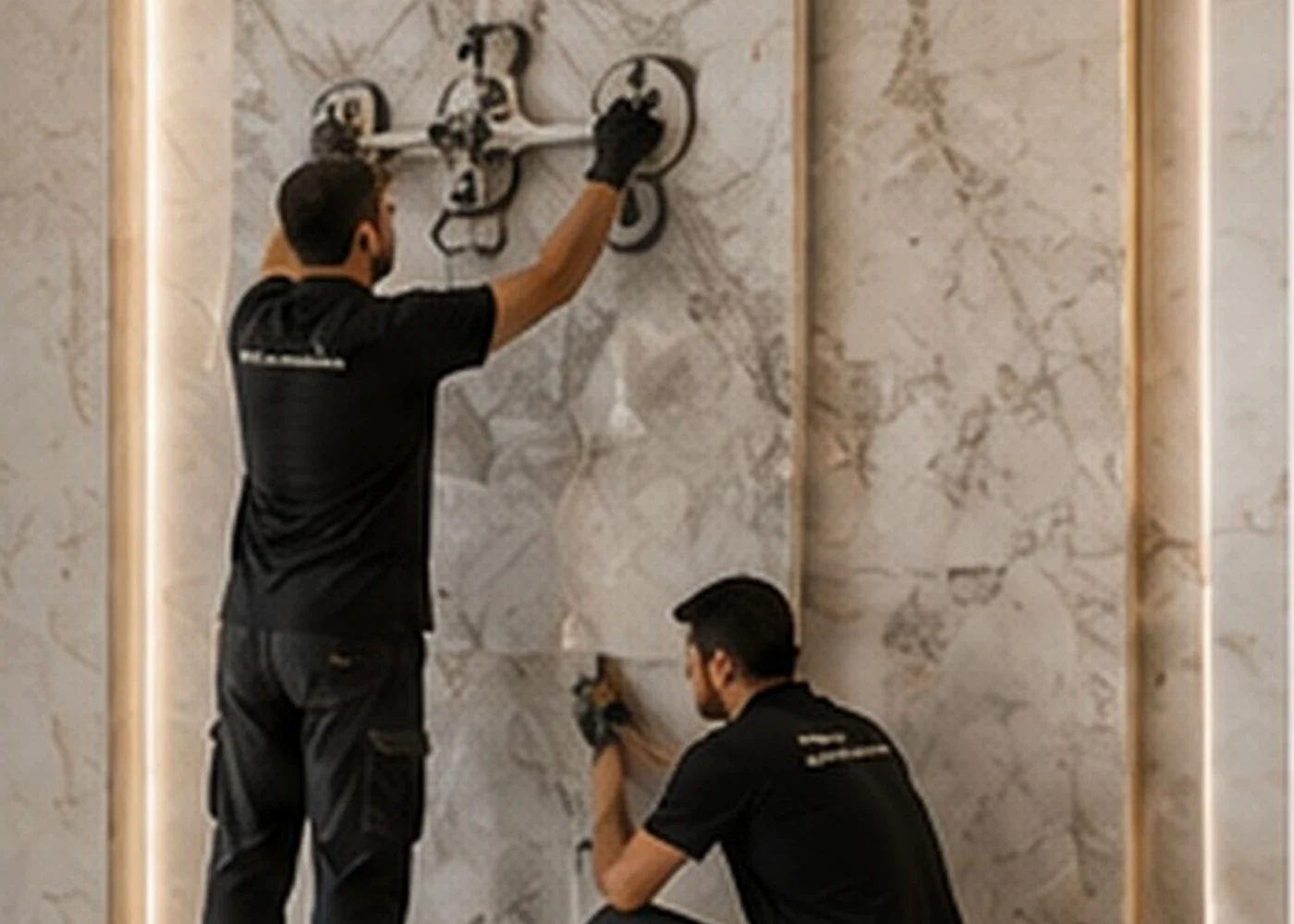
We carried out the recorded marble and stone project package for a B+G+3P+11F+R building in Satwa with TAK Construction LLC. This page is built around the project's urban delivery logic: limited staging space, basement and podium transitions, vertical movement through eleven floors and the need to avoid bringing delicate finished stone into work fronts before the surrounding construction is ready.
WHAT WE DELIVERED
What we did on this project
We delivered the recorded marble and stone scope for the Satwa B+G+3P+11F+R building with TAK Construction LLC.
A dense urban project does not always offer generous storage or unrestricted movement. Finished stone becomes a liability if it reaches site too early and is moved repeatedly around unfinished work.
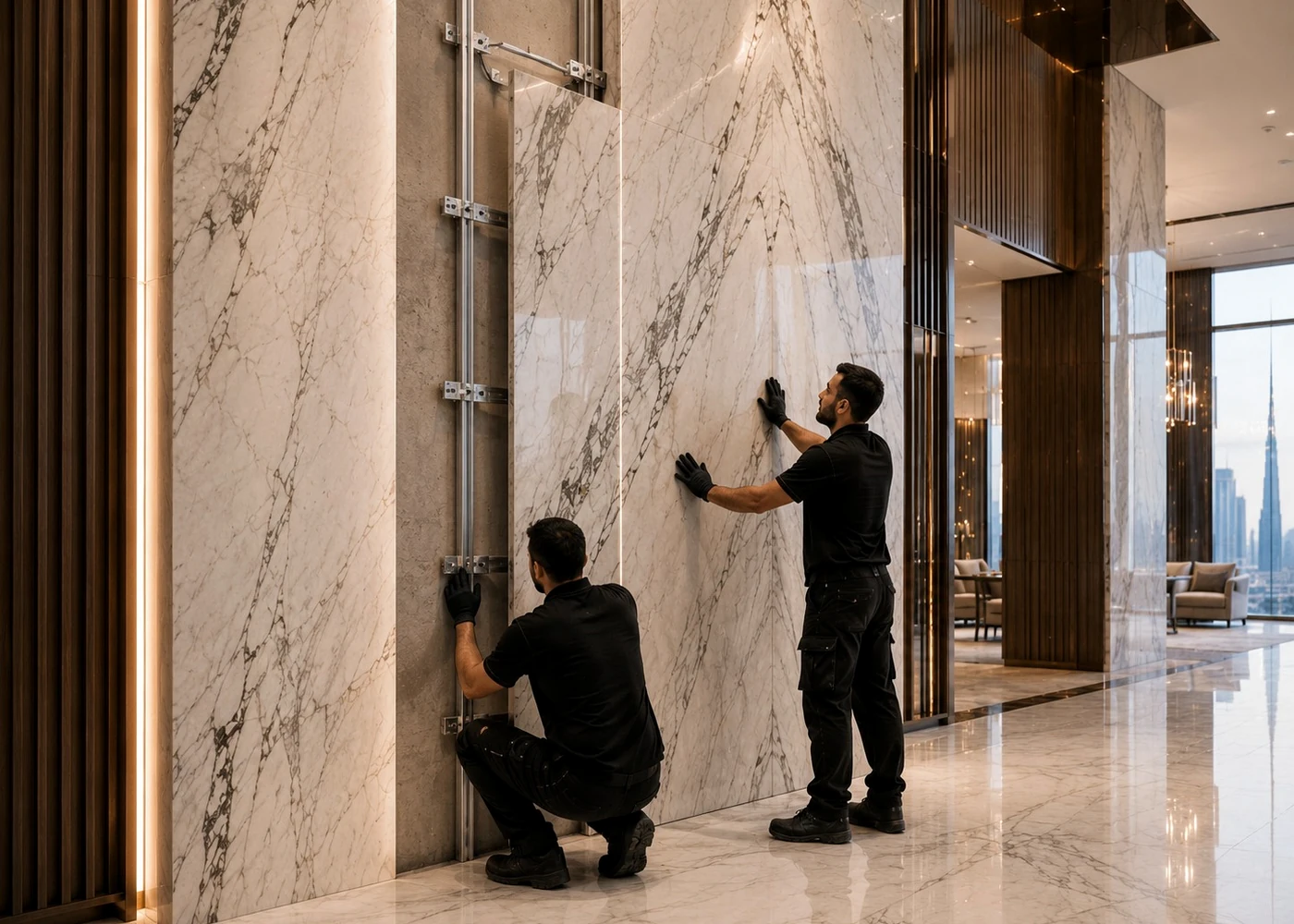
The practical response is to tie fabrication, delivery and installation to work-front readiness. Basement and podium zones are handled separately, while the upper floors can use a controlled repeat reference once the building condition stabilizes.
THE REAL DELIVERY CHALLENGE
Early delivery creates extra handling, edge damage and contamination risk; late delivery can stop the work front entirely.
Challenge
Early delivery creates extra handling, edge damage and contamination risk; late delivery can stop the work front entirely.
Our response
The aim is to reduce double handling: material should arrive when the receiving area, vertical route and installation team are ready for it.
What the project demonstrates
The project strengthens our ability to coordinate material flow, vertical access and finish protection instead of treating transport as separate from workmanship.
PROJECT DELIVERY CONTROLS
These controls are tailored to the recorded project context and are not presented as a reconstructed historical BOQ.
Match deliveries to actual work-front readiness and vertical access.
Reduce unnecessary movement of finished pieces once they reach site.
Treat lower-zone logistics and geometry independently from upper-floor repetition.
Stage recurring floor material in controlled groups.
Protect finished stone during lifting, storage and movement through active construction.
Close installed zones quickly so completed work is not repeatedly exposed.
HOW WE APPROACHED THE WORK
The original historical method statement is not available; this sequence reflects the practical control logic appropriate to the verified project record.
Know where the material can actually go before it leaves the yard.
Send the pieces needed for the current work front.
Check levels and interfaces before installation.
Reduce the period in which finished stone remains exposed.
Keep the site flow disciplined.
PROJECT VISUALS
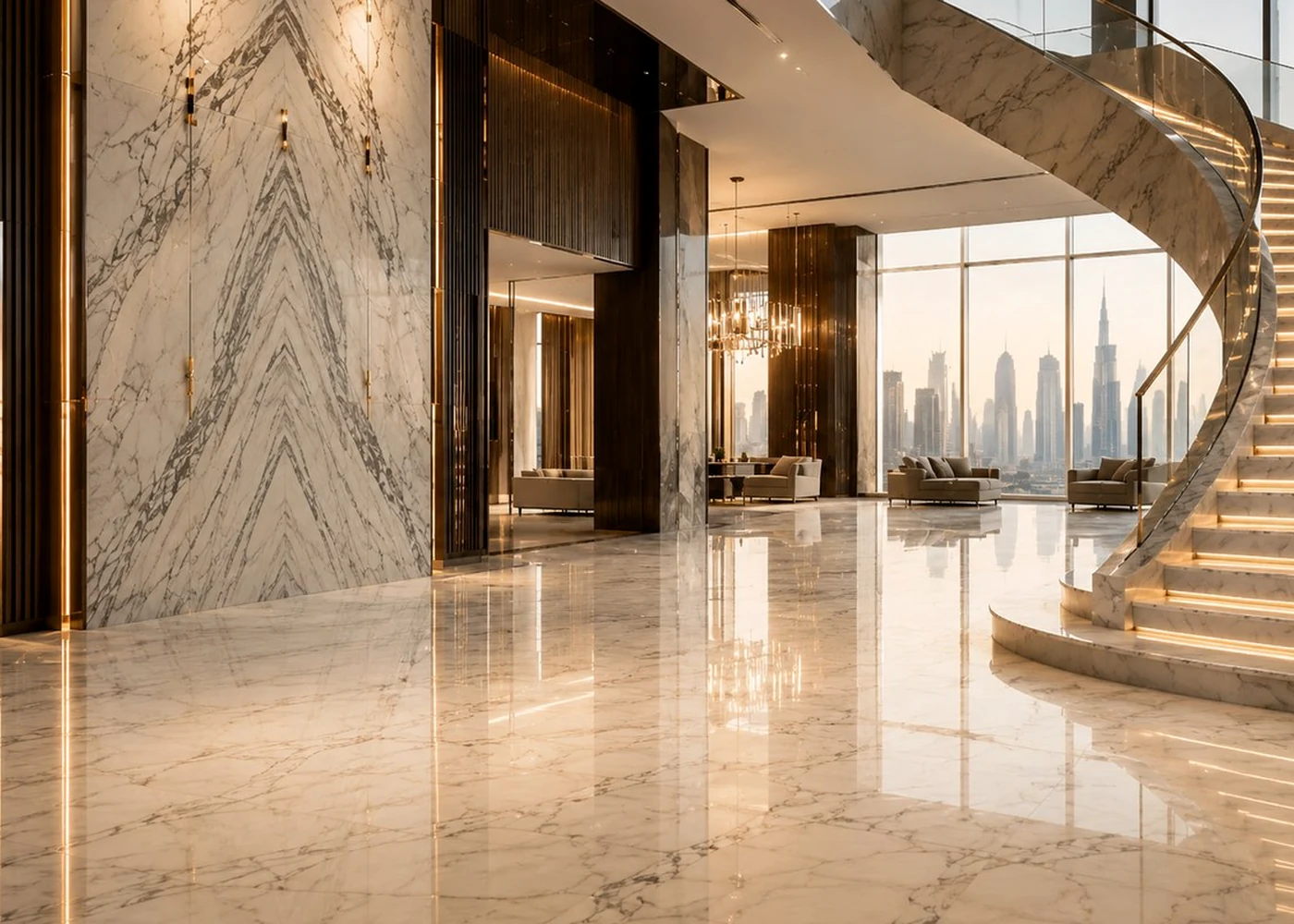
These URLs intentionally use existing generic site images so the page works now. Replace them later without changing the database structure.

WHAT THIS PROJECT ADDS TO OUR EXPERIENCE
Experience that carries into the next project
The Satwa project adds delivery discipline and work-front sequencing to our high-rise experience.
EXPERIENCE WE CARRY FORWARD
These points explain why this completed project matters as experience, rather than simply listing it as another completed job.
Planning stone movement around constrained access and active construction.
Sending material in installable packages rather than uncontrolled bulk.
Separating basement/podium conditions from upper-floor repetition.
Reducing extra handling once finished stone reaches the site.
PLANNING A SIMILAR PROJECT?
Send the access restrictions, floor sequence, lifting plan, stone schedule and required work-front dates so installation can be planned around real movement conditions.