WATERJET MARBLE PATTERNS & INLAYS IN DUBAI

Waterjet Marble Patterns & Inlays in Dubai

The drawing becomes stone only after every joint has somewhere to land.

For marble medallions, borders, logos, geometric floor inserts and multi-stone inlays where ordinary straight cutting cannot reproduce the design. We translate the approved artwork into cuttable stone geometry, review minimum piece sizes and joint widths, plan colour and vein placement, then assemble the pattern in a controlled sequence so the finished design reads as one composition rather than a collection of loose fragments.

Artwork Checked FirstCurves, radii, lettering and tiny pieces are reviewed before fabrication so the drawing is technically cuttable.
Stone Placement PlannedColour contrast, vein direction and piece orientation are considered before the parts are nested and cut.
Dry Assembly Before FixingComplex inlays are laid out and checked as a complete composition before permanent installation where the scope allows.
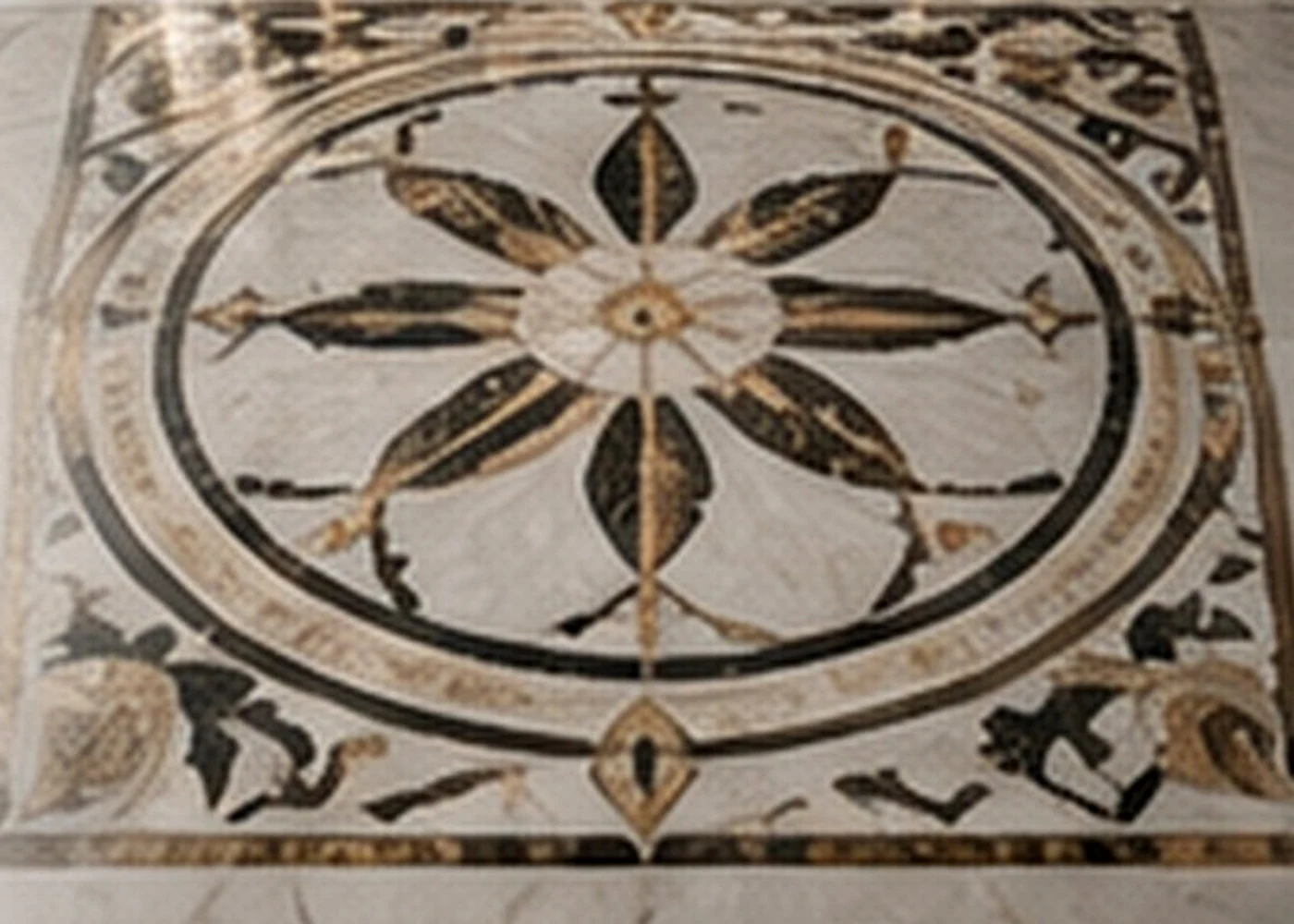
Decorative natural stone waterjet floor medallion with multiple marble colours and precision-cut inlay pieces

IS WATERJET THE RIGHT FABRICATION ROUTE?

Choose waterjet when the design depends on curves, repeated geometry or multiple stones fitting together precisely.

Waterjet cutting is a fabrication method, not a decorative label for every custom stone job. It is most useful when the artwork contains geometry that would be slow, inconsistent or impossible to execute cleanly with straight saw cuts alone.

WATERJET IS USUALLY THE RIGHT ROUTE WHEN

  • A floor medallion, border or feature insert uses curves, arcs, petals, radial geometry or repeated motifs.
  • Two or more stone colours need to interlock with controlled joint widths rather than simply meet at straight seams.
  • A logo, monogram, directional symbol or custom graphic has to be translated from vector artwork into stone pieces.
  • The design needs repeatable precision across several identical panels, borders or decorative modules.

A DIFFERENT FABRICATION ROUTE MAY BE BETTER WHEN

  • The requirement is only a straight countertop, vanity top or rectangular opening — standard slab fabrication is usually more efficient.
  • The feature is a large book-matched wall with no decorative cut geometry — flooring and wall cladding is the more direct installation route.
  • The stone is already installed and the requirement is only to change sheen, texture or slip performance — surface finishing should be assessed instead.
  • The artwork relies on pieces so thin or pointed that the selected stone cannot be handled safely; the design may need to be simplified before cutting.
CHECK COUNTERTOP FABRICATION

WHAT PRECISION INLAY FABRICATION HAS TO SOLVE

A beautiful pattern can still fail if the joints, tiny pieces and stone direction are not resolved before cutting.

The technical work happens before the machine starts. Artwork that looks clean on screen may create fragile tips, impossible internal corners, inconsistent grout lines or a pattern that cannot be assembled reliably in stone.

01

Pieces too small to survive handling

Fine lettering, narrow leaves and pointed geometry can create fragile stone parts that chip during cutting, transport or installation.

Target: adjust minimum piece sizes and radii before fabrication rather than discovering the problem after cutting.
02

Inconsistent joint widths

A vector file can contain shapes that mathematically touch but do not leave a practical installation joint between different stone pieces.

Target: engineer repeatable joint allowances into the production drawing.
03

Veins running in conflicting directions

Natural stone movement can make one segment look visually upside down even when the cut geometry is technically correct.

Target: orient visible pieces deliberately before nesting and cutting.
04

Weak internal corners

Sharp internal corners and tiny notches concentrate stress and are difficult to cut and handle cleanly in brittle stone.

Target: introduce practical radii or redesign transitions without changing the overall visual intent.
05

Colour contrast that disappears on the slab

Two materials can look different in a sample box but merge visually when the pattern is viewed across a full floor.

Target: review contrast at project scale before committing the complete design.
06

Pattern assembled in the wrong sequence

Complex medallions can contain dozens of similar pieces; without numbering and dry layout the design can drift during installation.

Target: use a controlled piece map and dry-assembly sequence for the finished composition.

FROM ARTWORK TO INSTALLED STONE

Convert the design, prove the geometry, cut the stone, dry assemble it — then fix it.

A waterjet project is a chain of dependent decisions. Changes to scale, stone thickness or joint width after cutting can invalidate several pieces at once, so approval is deliberately front-loaded.

  1. 01

    Review the artwork and final installed size

    We confirm overall dimensions, orientation, location, symmetry and whether the supplied drawing is suitable for fabrication or needs to be redrawn as clean vector geometry.

  2. 02

    Engineer joints, radii and minimum piece sizes

    The drawing is checked for fragile tips, impossible internal corners, narrow bridges and practical joint widths so the geometry reflects how stone can actually be cut and installed.

  3. 03

    Assign stone materials and visible orientation

    Material colours, vein movement, thickness and piece orientation are mapped to the design before final nesting. Strong natural patterns are treated as part of the artwork rather than random fill.

  4. 04

    Waterjet cut, label and dry assemble

    Pieces are cut to the approved production drawing, identified for assembly and checked together so incorrect geometry or orientation is found before permanent fixing where possible.

  5. 05

    Install, joint and finish the completed inlay

    The design is transferred to the prepared substrate, aligned to surrounding floor or wall lines, fixed in sequence, then jointed and finished to the agreed surface condition.

Close view of a multi-piece marble waterjet inlay showing curved stone segments and precision joints
Curved pieces, sharp transitions and multiple materials make joint planning and piece numbering as important as the cutting itself.

WATERJET & INLAY RATES

The rate follows the number of cuts, pieces and materials — not just the outside size of the design.

A one-metre medallion with twelve broad pieces can be simpler than a smaller logo containing fifty thin characters. These rates are planning points; final fabrication is priced from the actual approved artwork and stone selection.

Service scopeFromUnitWhat it covers
Waterjet / Custom InlayAED 299/designStarting fabrication planning rate for a simple decorative stone design
Simple Border / Repeating MotifAED 360/designPlanning rate for straightforward repeated geometric border work
Multi-Stone Floor MedallionAED 690/designPlanning rate for a more complex circular or radial composition using several stone colours
Custom Logo / Monogram InlayAED 790/designPlanning rate where artwork, lettering and multiple small components require additional drawing and cut control
Complex Bespoke InlayAED 1,290/designPlanning rate for high-piece-count, fine-detail or highly customised stone artwork

Waterjet / Custom Inlay

AED 299 /design

Starting fabrication planning rate for a simple decorative stone design

Simple Border / Repeating Motif

AED 360 /design

Planning rate for straightforward repeated geometric border work

Multi-Stone Floor Medallion

AED 690 /design

Planning rate for a more complex circular or radial composition using several stone colours

Custom Logo / Monogram Inlay

AED 790 /design

Planning rate where artwork, lettering and multiple small components require additional drawing and cut control

Complex Bespoke Inlay

AED 1,290 /design

Planning rate for high-piece-count, fine-detail or highly customised stone artwork

Indicative starting rates only. Final pricing depends on approved artwork, dimensions, piece count, stone materials, thickness, minimum feature size, joint strategy, dry assembly, backing, transport and installation. Stone supply is excluded unless specifically stated in the written quotation.

Finished decorative marble inlay medallion showing contrasting natural stone colours and precise curved joints

DESIGN & ASSEMBLY OPTIONS

The same pattern can read very differently depending on contrast, joint colour and final surface finish.

A waterjet design is not complete when the shapes are cut. The final visual result depends on how the materials are paired, how the pieces are assembled and whether the inlay is finished flush with the surrounding stone.

01

Two-tone geometric inlay

Uses clear contrast between two stones to make the pattern readable without a high number of tiny pieces.

02

Multi-stone medallion

Combines several marble, granite or other compatible stones to build a richer radial or ornamental composition.

03

Logo / monogram insert

Translates approved vector identity artwork into practical stone geometry with adjusted line weights and radii where needed.

04

Border & field combination

Uses a waterjet border or corner motif to frame a larger field of straight-laid stone without making the full area decorative.

WHERE WATERJET INLAYS ARE USED

Feature geometry for floors, entrances, walls and branded interiors.

The best location is one where the design can be seen at the intended viewing distance and aligned to the room architecture rather than hidden by furniture or cut awkwardly at door lines.

Villa entrance medallionsHotel & lobby feature floorsLift-lobby borders & insertsCorporate logos & monogramsReception / retail feature panelsCustom wall and floor borders

MATERIAL SELECTION FOR INLAYS

Choose stones that can be cut, handled and finished together — not only colours that look good side by side.

Different stones vary in hardness, brittleness, thickness and surface response. Mixing materials without considering those differences can create weak pieces or uneven finishing after installation.

Natural MarbleWell suited to decorative inlays where colour contrast and vein character are carefully selected; fine points need practical minimum sizes.
GraniteUseful for strong contrast and durable inserts; cutting and finishing characteristics differ from softer marble.
QuartziteHard natural stone with dramatic movement; suitable for selected inlay work where thickness and cutting detail are appropriate.
Engineered / Sintered MaterialsMay be used for compatible decorative components, but thin pieces, edge chipping and material-specific cutting limitations must be reviewed first.
WATERJET, COUNTERTOP FABRICATION OR CLADDING?

Choose the fabrication route by the geometry the project actually needs.

All three involve stone cutting, but they solve different design problems and should not be treated as interchangeable services.

CURVES / MULTI-STONE DESIGN

Waterjet Patterns & Inlays

Choose waterjet when several cut pieces must interlock into decorative curves, logos, medallions or repeating motifs.It is unnecessary for straightforward rectangular slab work with only straight edges.Current service

WORKTOP GEOMETRY

Countertops & Vanity Tops

Choose countertop fabrication for worktops, vanity tops, sink openings, hob openings, profiles and site-templated slab components.It is not the main route for decorative floor medallions or high-piece-count inlays.View countertops →

LARGE FLOOR / WALL SURFACE

Flooring & Wall Cladding

Choose flooring and cladding when the primary task is fixing large stone pieces to the building with controlled joints and layout.Standard cladding does not replace precision waterjet cutting when the design depends on complex interlocking geometry.View installation →

WATERJET INLAY FAQ

Questions to settle before the artwork becomes stone.

The most important decisions happen before fabrication, when geometry, materials and installation joints can still be changed without wasting finished pieces.

01How much does a marble waterjet design cost in Dubai?

Our simple custom waterjet or inlay planning rate starts from AED 299 per design. More complex medallions, logos and high-piece-count designs cost more because artwork preparation, cut length, material changes, tiny-piece handling, dry assembly and installation requirements increase. The final quotation is produced from the actual approved artwork and chosen stones.

02What file should I send for a waterjet marble design?

Vector artwork such as AI, EPS, SVG, PDF or clean CAD geometry is the best starting point when available. A photo or sketch can still be used as a visual reference, but it normally needs to be redrawn into production geometry before stone cutting. Final scale, orientation and dimensions must be confirmed.

03Can any logo or drawing be cut in marble?

Not exactly as drawn in every case. Very thin strokes, acute points, tiny islands and tight internal corners may create pieces that are too fragile to cut or install safely. We adapt minimum widths and radii while preserving the design as closely as practical.

04Can different marble colours be combined in one inlay?

Yes. Multi-stone contrast is one of the main advantages of decorative inlay work. The selected materials should be reviewed for thickness, brittleness, visual contrast and finish compatibility so the completed surface can be assembled and finished consistently.

05Do you dry assemble the inlay before installation?

For complex designs, dry assembly is strongly preferred where practical because it confirms piece orientation, joint relationships and the overall pattern before permanent fixing. The exact assembly method depends on the project size, backing system, transport and installation sequence.

06Can a waterjet medallion be installed into an existing marble floor?

Potentially, but the existing floor has to be assessed for thickness, levels, substrate condition and how the opening will be cut without damaging surrounding slabs. A new inlay cannot simply be dropped into an existing floor without coordinating depth, perimeter joints and final refinishing.

07Does the starting waterjet price include the marble?

No, not automatically. The planning rate is for the fabrication scope described. Stone supply, premium material selection, artwork redrawing, backing, transport, installation and surrounding floor work are quoted separately unless specifically included in the written proposal.

HAVE A MEDALLION, LOGO OR CUSTOM STONE DRAWING?

Send the artwork before you simplify the idea for the cutter.

Share the design file or reference image, intended dimensions, installation location and preferred stone colours. We can identify fragile geometry, missing information and the likely fabrication route before a final quotation is prepared.