Challenge
Keep ten separate towers connected to one approved stone standard.
Multiple buildings create more opportunities for material variation, joint drift, inconsistent details and local site decisions to become development-wide differences.
COMPLETED MULTI-BUILDING PROJECT · DUBAI
Ten towers turn quality control into a programme system: the benchmark, material allocation, repeated details and handover logic have to remain connected from the first building to the tenth.
We carried out the recorded marble and stone project package for a G+5 development comprising 10 towers in Dubai with MESC Contracting. This is one of the strongest scale records in the archive because both the typical building height and the number of separate towers are stated. The page therefore focuses on multi-building consistency: setting common references, controlling material and detail variation, sequencing work tower by tower and preventing a small error in one building from becoming the standard across the entire programme.

WHAT WE DELIVERED
At this scale, the challenge is not only finishing each tower well; it is making sure Tower 10 still follows the same approved quality logic established at Tower 1.
Our completed-project register records a G+5, 10 Towers project in Dubai with MESC Contracting. That scale changes the way a stone package has to be managed. There are repeated building conditions, but also ten separate structures, work fronts, delivery sequences and handover points.
The risk on a programme like this is uncontrolled variation. If one tower starts using a different joint reference, edge treatment or material allocation without formal control, that change can spread into later buildings and create a development that looks inconsistent even when each individual installation is technically acceptable.
We therefore frame the project around master reference control and tower-by-tower verification. The archive does not provide the exact stone BOQ, but the completed record clearly demonstrates experience operating across a multi-building programme rather than a single isolated structure.
THE REAL DELIVERY CHALLENGE
Multi-building consistency depends on governance: the approved detail, material logic and inspection criteria have to survive changes in crew, timing and work front.
Challenge
Multiple buildings create more opportunities for material variation, joint drift, inconsistent details and local site decisions to become development-wide differences.
Our response
The repeatable details remain common while tower-specific site conditions are checked and documented before any adjustment is carried forward.
What the project demonstrates
The completed record adds ten-tower coordination, cross-building consistency and progressive programme handover to our Dubai portfolio.
PROJECT DELIVERY CONTROLS
The exact historical method statement is unavailable. These controls are programme-level inferences from the verified ten-tower project scale.
Establish one approved reference for joints, edges, finish quality and recurring stone details before the programme scales across all towers.
Treat each building as its own work front so local readiness is verified without changing the development-wide standard.
Organize natural stone variation and prepared material so separate towers do not receive uncontrolled visual differences.
Keep common details tied to one reference and formally review any site-driven change before it is repeated elsewhere.
Compare completed work between towers so deviation is identified while the same details are still being executed in later buildings.
Close towers or defined zones progressively so outstanding issues do not accumulate across ten buildings at the end of the programme.
HOW WE APPROACHED THE WORK
The original project method statement is unavailable; this sequence reflects multi-building stone programme control.
Lock the recurring stone detail, finish expectation and inspection reference before broad repetition begins.
Confirm the building is actually ready and identify any tower-specific condition before installation starts.
Allocate and deliver stone in controlled batches that match real building progress and visual requirements.
Complete the active tower or zone, then compare recurring details against the master reference and previous completed buildings.
Resolve local deviations before the same condition is repeated in the remaining towers.
PROJECT VISUALS
Original project photographs were not supplied. Representative tower stone visuals are included and can later be replaced while keeping the same paths.


WHAT THIS PROJECT ADDS TO OUR EXPERIENCE
The benchmark becomes more valuable every time it is repeated correctly.
This project adds one of the clearest multi-building scale proofs in our archive: ten G+5 towers completed as part of one recorded project.
EXPERIENCE WE CARRY FORWARD
Programme-level controls that matter when one stone standard has to survive across multiple buildings.
Using one approved benchmark so separate towers do not develop their own uncontrolled interpretation of the detail.
Managing natural variation and prepared pieces across multiple buildings instead of treating supply as one undifferentiated stockpile.
Respecting local site conditions while preventing local fixes from automatically becoming programme standards.
Finishing and comparing buildings as the project advances so issues are not multiplied across the remaining towers.
RELATED COMPLETED PROJECTS
Explore other completed projects with similar property, location or stonework context.
Completed 56-location programme recorded with Amana Steel Building.
VIEW CASE STUDY →Completed 604-villa project recorded with Wood Packer Furniture.
VIEW CASE STUDY →Recorded 1,850-villa Phase 1 project.
VIEW CASE STUDY →SERVICES RELEVANT TO SIMILAR PROJECTS
For similar projects, the services below may be relevant depending on the actual stone, drawings, quantities, fabrication requirements and site conditions.
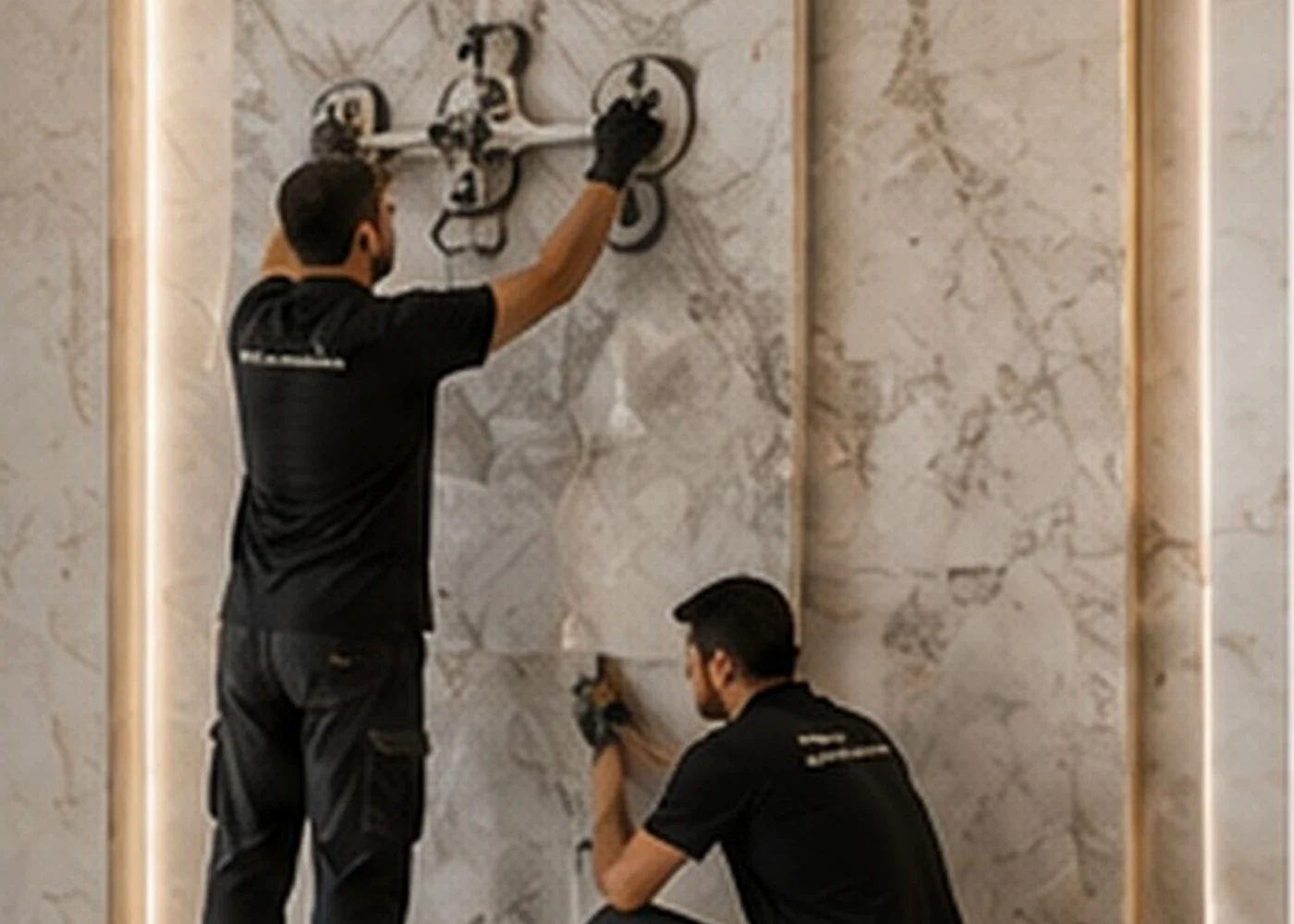
For repeated floor, wall, staircase and feature-surface packages where set-out and quality references must remain controlled across buildings.
Explore service →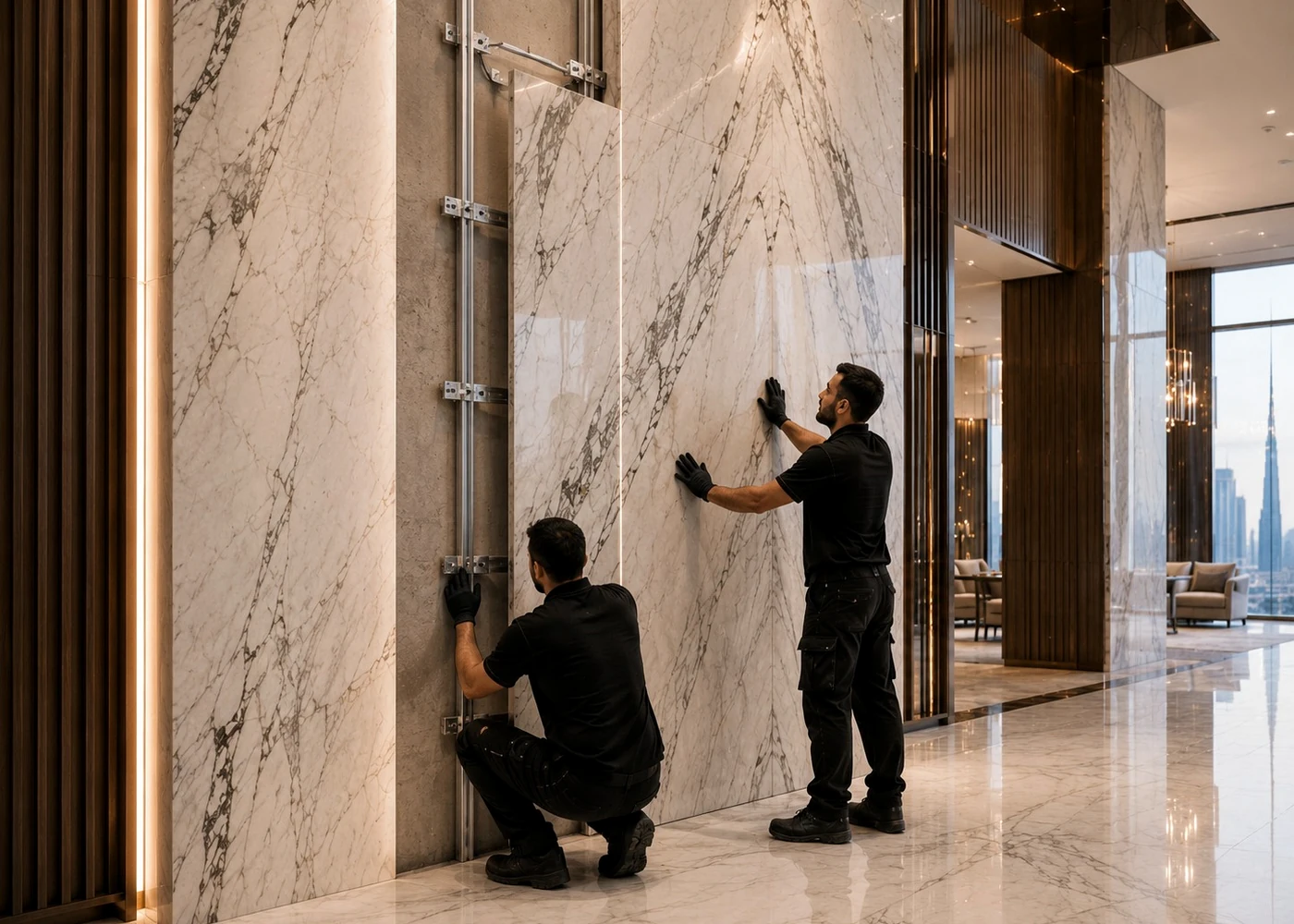
For large-format or heavy vertical stone where the project requires a coordinated anchor, rail or bracket system.
Explore service →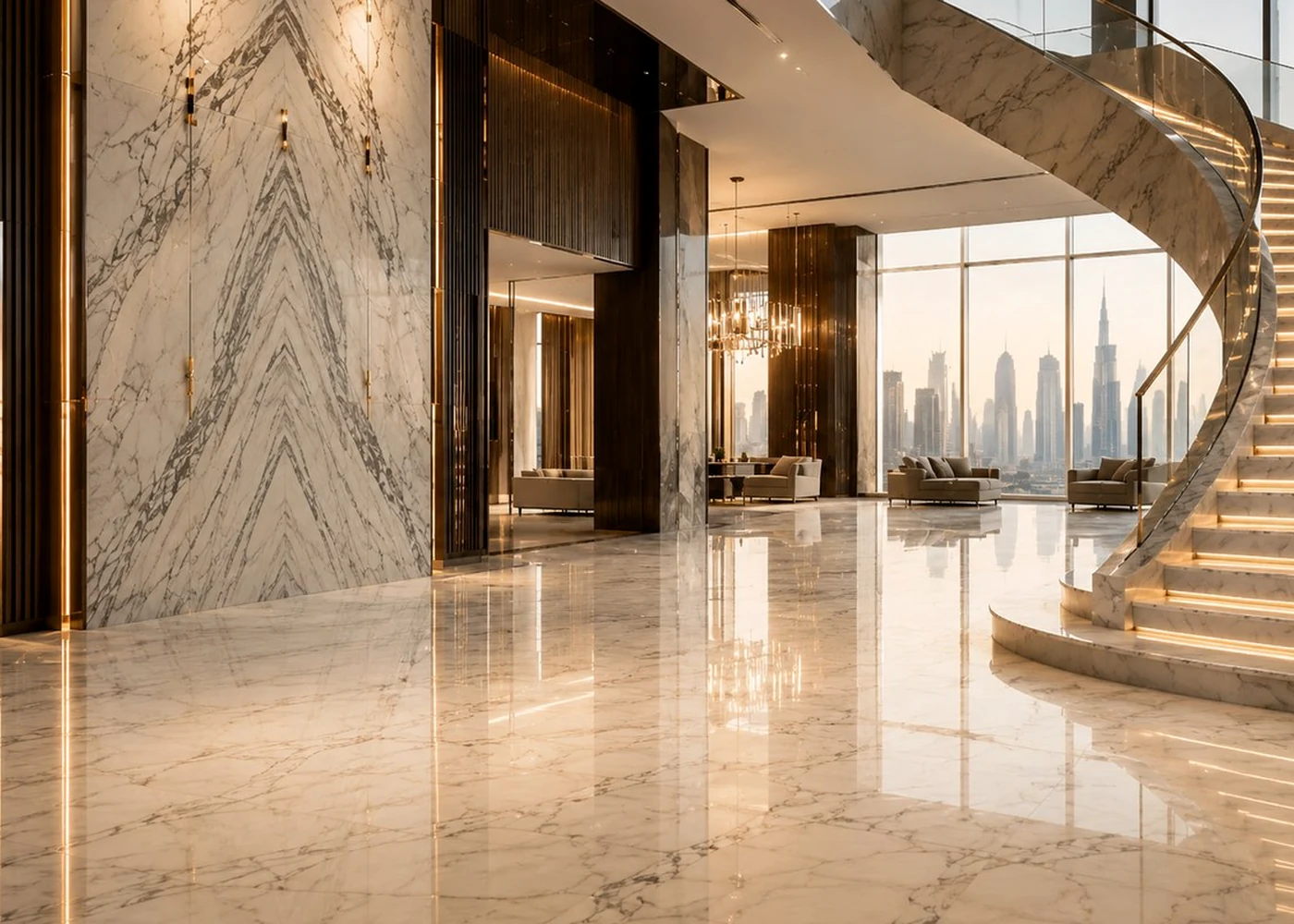
For maintaining consistent polished, honed, textured or protected surface expectations across repeated buildings and zones.
Explore service →PLANNING A SIMILAR PROJECT?
Send us the tower matrix, typical details, stone schedule, material approvals, programme sequence and handover strategy. We can help define the master benchmark and the controls needed to keep it consistent across every building.