COMPLETED MEGA VILLA PROGRAMME · DUBAI

DAMAC Phase 1 — 1,850 Villas

At 1,850 villas, marble and stone work stops being a collection of individual jobs and becomes a production, logistics and quality-control programme.

We carried out the recorded marble and stone project package for DAMAC Phase 1 across 1,850 villas in Dubai. The archive also names the Calero, Trinity, Pelham, Rockwood, Rochester and Spring clusters. This is one of the largest explicit scale records in the project list, so the case study focuses on programme-level control: cluster segmentation, villa-type benchmarks, batch preparation, material allocation, repeat-detail governance, multi-front coordination and progressive handover at very large residential scale.

1,850VillasExplicitly recorded project scale
DubaiLocationAs recorded in project archive
Not stated in supplied registerProject PartnerNo separate contractor / partner listed on this archive row
CompletedStatusHistorical completed-project register
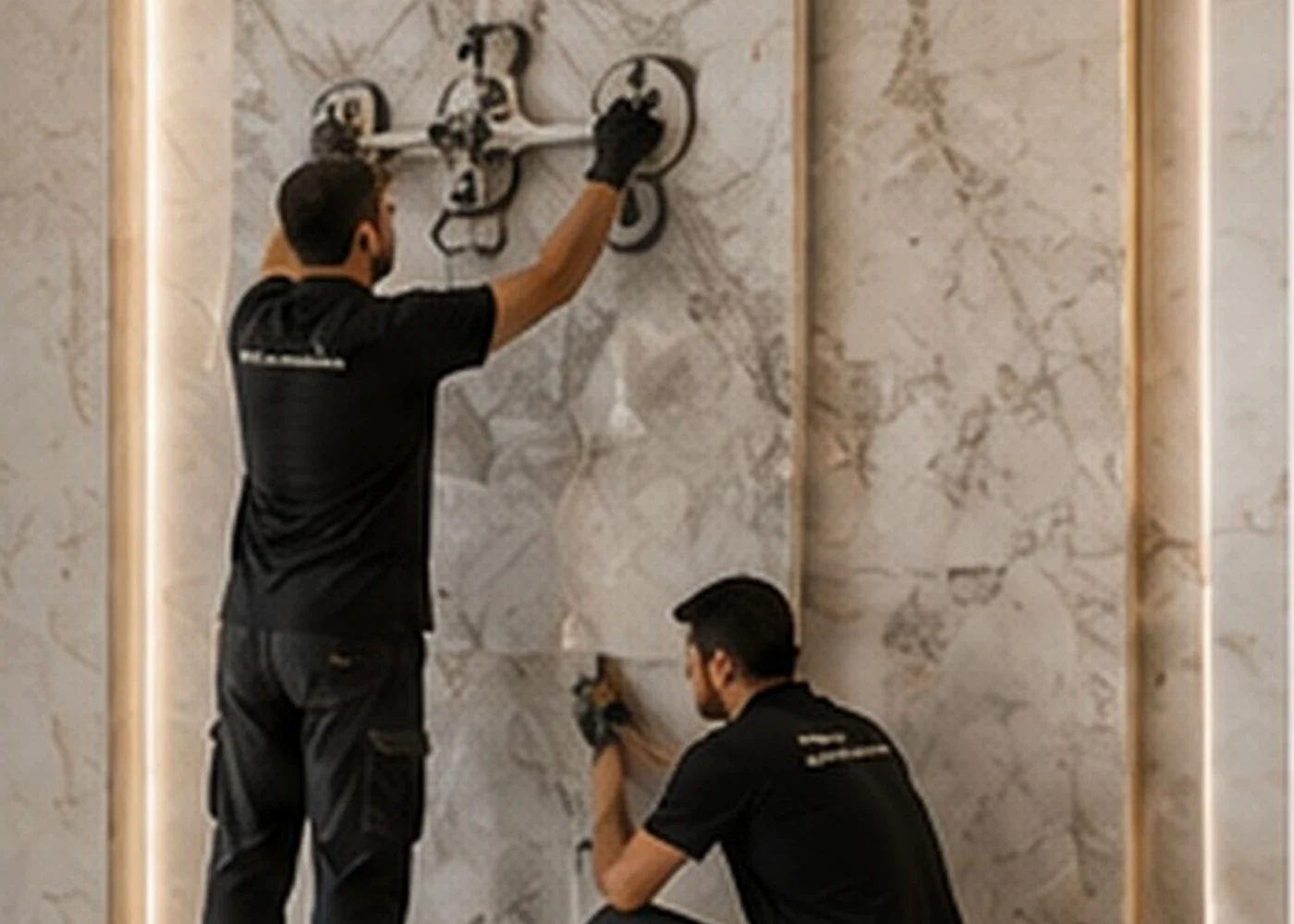
Temporary representative project image for DAMAC Phase 1 — 1,850 Villas TEMPORARY REPRESENTATIVE IMAGE
Project partnerNot stated in supplied register
ProjectDAMAC Phase 1 — 1,850 Villas
Recorded locationDubai
Case study URL/projects/damac-phase-1-1850-villas/

WHAT WE DELIVERED

A completed 1,850-villa programme where consistency had to be engineered into the process.

What we did on this project

The archive records DAMAC Phase 1 at a scale of 1,850 villas across six named clusters: Calero, Trinity, Pelham, Rockwood, Rochester and Spring.

At that size, the main risk is multiplication. A small drawing misunderstanding, edge decision or material-allocation mistake can be repeated hundreds of times before it becomes obvious at programme level.

We therefore frame this project around governance rather than isolated craftsmanship: segment the work by cluster and villa type, establish repeat benchmarks, release stone in controlled batches, compare quality trends across fronts and hand over progressively so local problems are stopped before they become programme-wide.
THE REAL DELIVERY CHALLENGE

Keep 1,850 individual homes connected to one quality system without allowing a local error to scale with the programme.

Mega-programme risk is exponential: what looks like one small mistake on a single villa can become hundreds of repeated defects if the feedback loop is slow.

01

Keep 1,850 individual homes connected to one quality system without allowing a local error to scale with the programme.

Mega-programme risk is exponential: what looks like one small mistake on a single villa can become hundreds of repeated defects if the feedback loop is slow.

02

Segment the programme, standardize by repeatable typology, verify by active work front and track quality trends continuously.

The work is treated as a controlled production-and-installation system rather than one undifferentiated villa count.

03

Completed marble and stone experience at 1,850-villa residential scale.

This project is one of the strongest explicit scale proofs in our archive and demonstrates programme governance across multiple named clusters.

PROJECT DELIVERY CONTROLS

The controls required when the project scale reaches 1,850 villas.

These controls are tailored to the recorded project context and are not presented as a reconstructed historical BOQ.

01

Cluster segmentation

Break the programme into manageable geographic / operational groups instead of controlling 1,850 villas as one block.

02

Villa-type benchmarks

Standardize genuinely recurring details before broad repetition.

03

Batch / production control

Prepare stone in traceable batches aligned with actual villa release.

04

Material allocation

Manage natural variation and prepared components across a very large unit count.

05

Defect trend tracking

Identify recurring issues early and stop them before they spread across clusters.

06

Progressive handover

Close villas and cluster groups continuously instead of building one huge final snag list.

HOW WE APPROACHED THE WORK

Control the programme by cluster, typology and feedback loop.

The original historical method statement is not available; this sequence reflects practical project-delivery logic appropriate to the verified record.

01

Map clusters and repeat villa conditions

Know what repeats and where.

02

Approve the master detail benchmarks

Set the quality standard before broad scale.

03

Release controlled production batches

Match fabrication and delivery to real villa readiness.

04

Inspect and track recurring issues

Use completed villas as feedback for the next batch.

05

Hand over progressively by cluster / group

Keep programme quality visible and manageable.

Temporary representative experience image for DAMAC Phase 1 — 1,850 Villas

WHAT THIS PROJECT ADDS TO OUR EXPERIENCE

At 1,850 villas, the process itself becomes part of the craftsmanship.

Experience that carries into the next project

DAMAC Phase 1 adds mega-programme residential scale, cluster segmentation and defect-prevention discipline to our completed portfolio.

EXPERIENCE WE CARRY FORWARD

What a 1,850-villa programme adds to our operating experience.

These points explain why this completed project matters as experience rather than simply listing it as another completed job.

01

Mega-programme segmentation

Breaking a huge unit count into controllable clusters and typologies.

02

Repeat-detail governance

Making sure the approved standard survives broad repetition.

03

Feedback-loop speed

Using early completed units to correct later production quickly.

04

Progressive closure at scale

Keeping handover manageable through continuous completion rather than end-loaded snagging.

PLANNING A SIMILAR PROJECT?

Planning stone work across hundreds of villas or multiple clusters?

Send the villa-type matrix, cluster plan, standard details, stone schedule and release programme so quality control can be designed for scale before production starts.