Challenge
Keep one stone quality standard alive through forty-two levels of time, repetition and changing work fronts.
On a long tower programme, inconsistency can come from gradual drift rather than one obvious mistake.
COMPLETED HIGH-RISE TOWER PROJECT · DUBAI
Forty-two levels turn repeated stone details into a quality system: the benchmark has to remain stable for much longer than the memory of any single work front.
We carried out the recorded marble and stone project package for Binghatti Hills Tower, G+42 in Dubai. The archive gives us an explicit high-rise scale — forty-two levels — but not the exact stone BOQ or separate contractor. This page therefore focuses on long-duration vertical repetition: benchmark governance, floor-group release, material consistency, dimension-sensitive exceptions, vertical logistics and progressive quality closure over a very long tower sequence.
WHAT WE DELIVERED
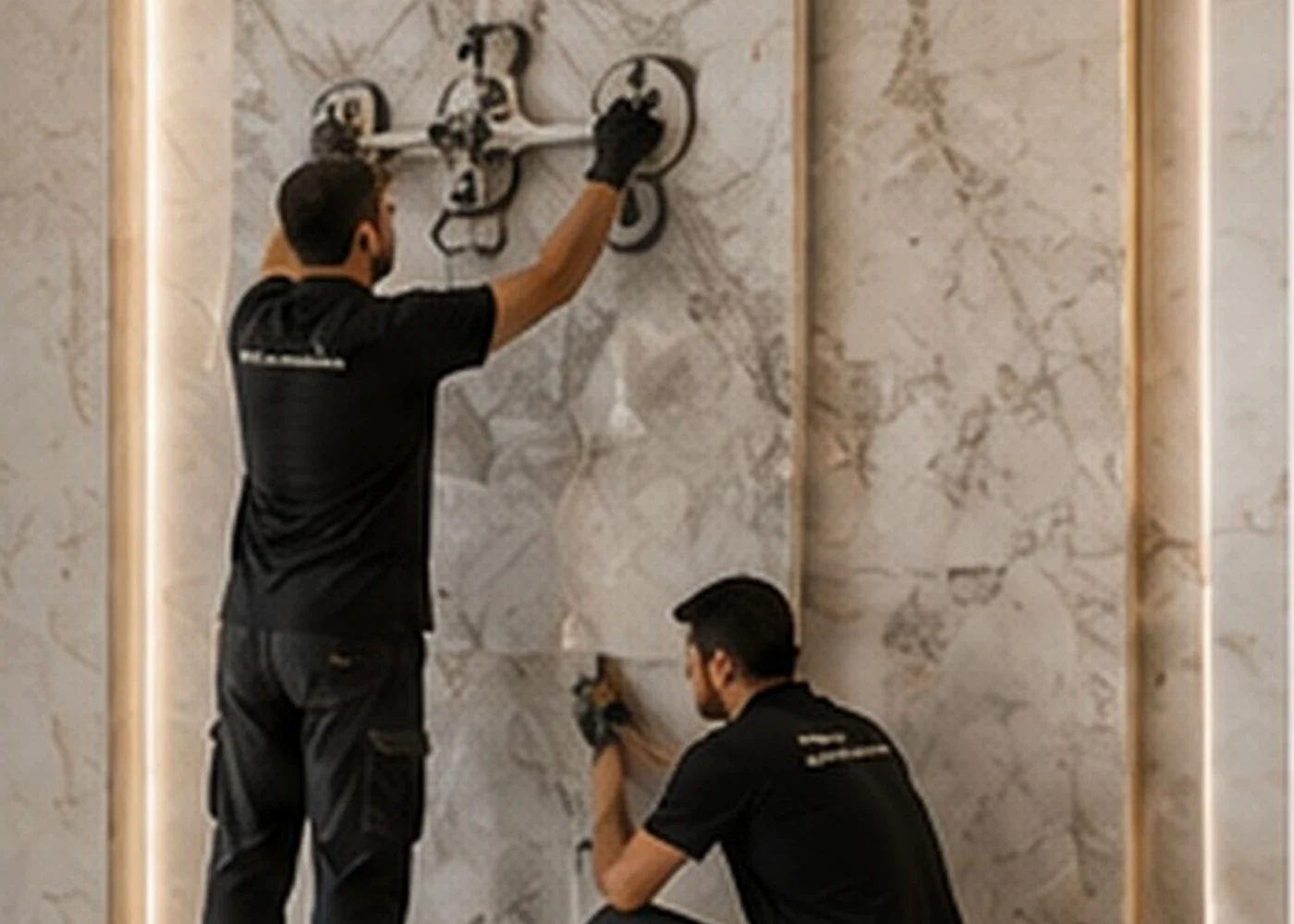
What we did on this project
The archive explicitly records Binghatti Hills Tower as G+42 in Dubai.
At forty-two levels, repetition creates efficiency only if the standard is documented and continuously checked. Crew changes, batch changes, floor-release timing and local site adjustments can all introduce drift over a long programme.
We therefore frame this project around benchmark governance: keep the recurring stone logic clear, separate true repeat pieces from dimension-sensitive exceptions, compare floor groups and correct deviations before they travel upward.
THE REAL DELIVERY CHALLENGE
On a long tower programme, inconsistency can come from gradual drift rather than one obvious mistake.
Challenge
On a long tower programme, inconsistency can come from gradual drift rather than one obvious mistake.
Our response
The recurring detail is not assumed to stay correct forever; it is revalidated through inspection, material review and exception management as the tower progresses.
What the project demonstrates
The project adds long-duration vertical quality governance and repeat-floor control to our high-rise portfolio.
PROJECT DELIVERY CONTROLS
These controls are tailored to the recorded project context and are not presented as a reconstructed historical BOQ.
Keep recurring joints, edges, finish and visible details tied to one clear reference.
Stage stone in manageable groups instead of treating forty-two levels as one bulk repetition.
Manage natural variation and prepared material across a long programme.
Separate dimension-sensitive or special-floor conditions from the typical package.
Match delivery and lifting to actual floor readiness.
Compare floor groups so gradual drift is identified before it becomes the new normal.
HOW WE APPROACHED THE WORK
The original historical method statement is not available; this sequence reflects practical project-delivery logic appropriate to the verified record.
Define what should stay constant through the tower.
Verify actual readiness and special conditions.
Control batch and movement.
Check the completed group against the approved reference.
Prevent slow variation from becoming systemic.
PROJECT VISUALS
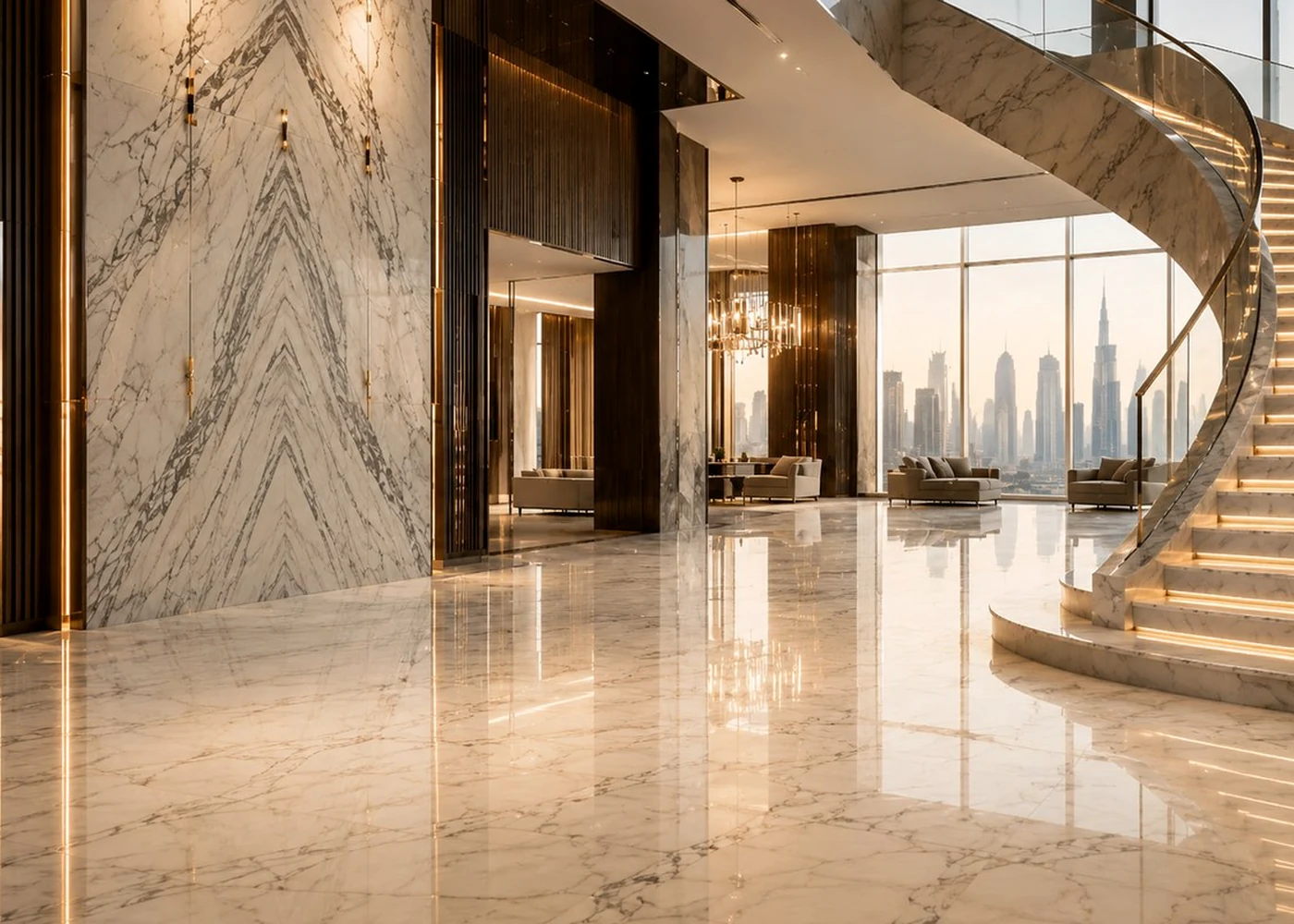
The URLs below intentionally use existing generic site imagery. Replace them later with the original project photography without changing the page structure or database record.


WHAT THIS PROJECT ADDS TO OUR EXPERIENCE
Experience that carries into the next project
Binghatti Hills G+42 adds long-duration repeat-work governance to our completed high-rise experience.
EXPERIENCE WE CARRY FORWARD
These points explain why this completed project matters as experience rather than simply listing it as another completed job.
Keeping the project standard clear over an extended vertical sequence.
Breaking a large tower into controllable repeat packages.
Looking for slow quality change, not only obvious defects.
Keeping special conditions from contaminating the typical-floor logic.
PLANNING A SIMILAR PROJECT?
Send the typical-floor details, special-floor matrix, material schedule and vertical programme so recurring work can be grouped, benchmarked and inspected without drift.