Challenge
Create a Phase 1 stone benchmark strong enough to support a G+13 repeat sequence and a later project phase.
Create a Phase 1 stone benchmark strong enough to support a G+13 repeat sequence and a later project phase.
COMPLETED PHASED HIGH-RISE PROJECT · SHARJAH
Phase 1 establishes the benchmark that later phases inherit, so the first repeated details have to be proven before they become normal.
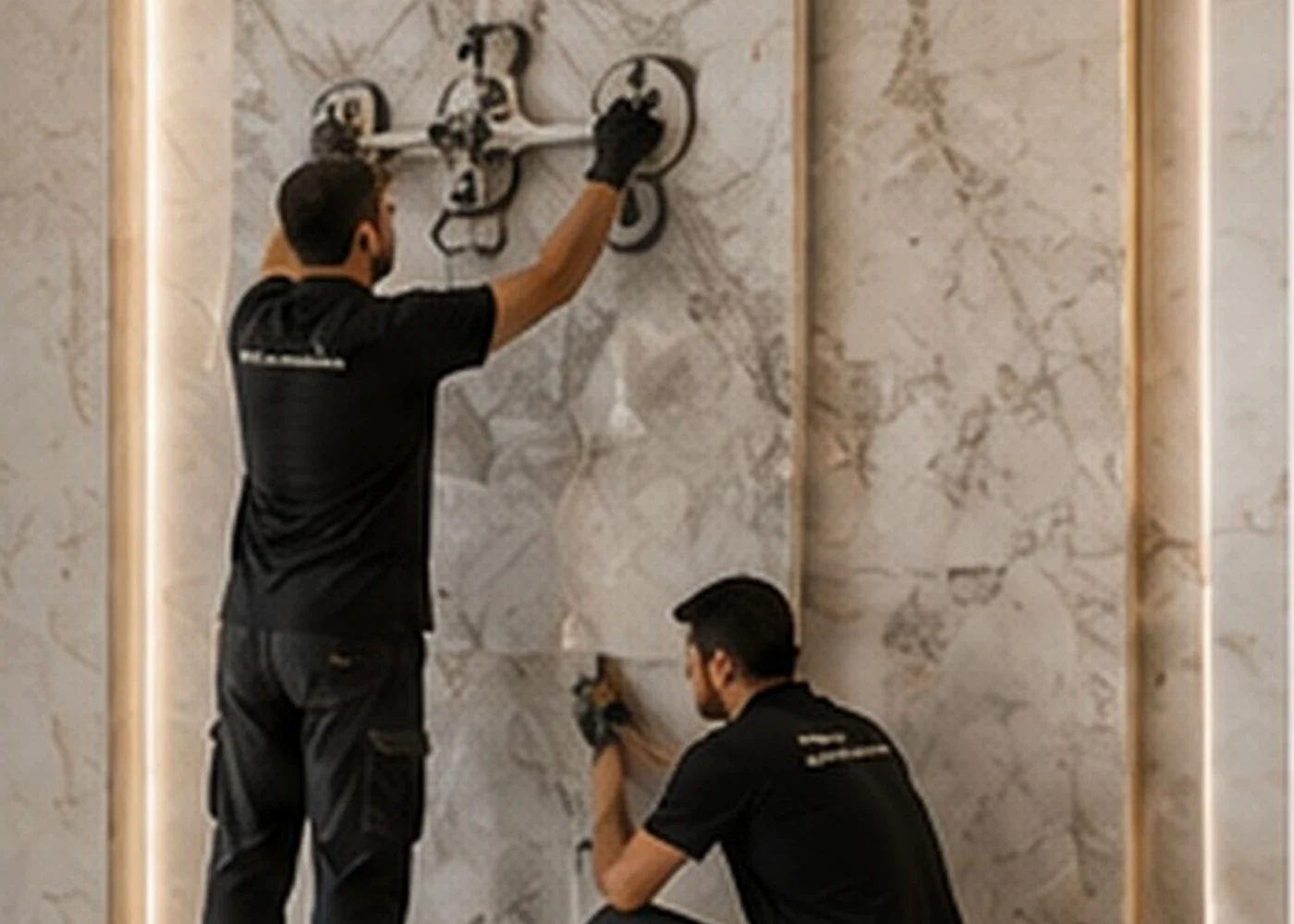
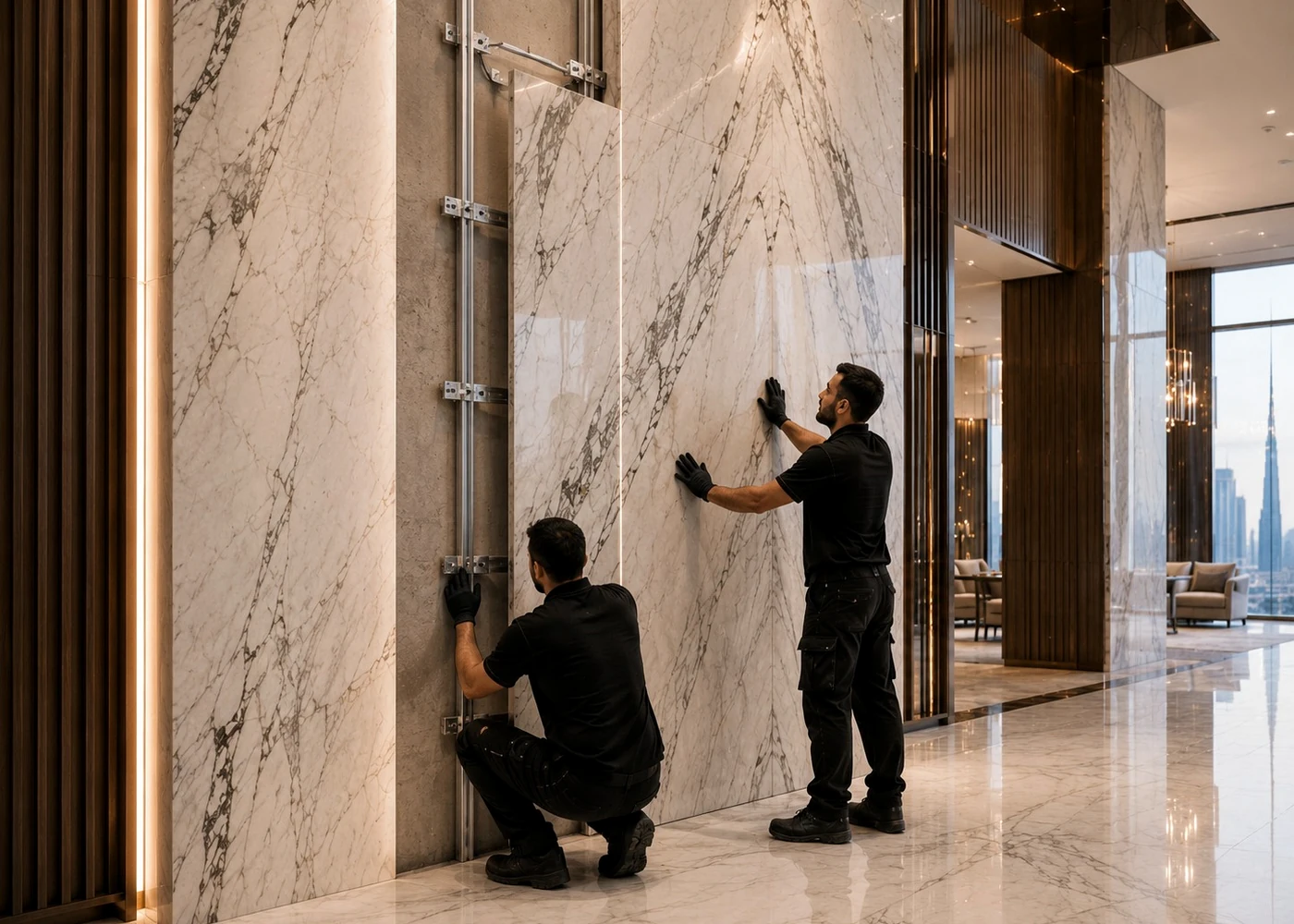
We carried out the recorded marble and stone package for a G+13 Phase 1 Building in Sharjah with Al Rehab Building Contracting. Because the archive identifies this specifically as Phase 1, we treated the first completed floors and recurring details as controlled references: verify the real condition, lock the joint and edge logic, review early material batches and correct repeatable issues before they are allowed to travel into the next floor group or the later project phase.
WHAT WE DELIVERED
What we did on this project
We delivered the recorded stone project for a G+13 Phase 1 building in Sharjah.
Phase 1 has a different responsibility from an isolated building: the early finish, joint, edge and transition decisions can become the standard that a later phase inherits.
Our delivery logic therefore centers on proving the repeatable conditions early, using completed work as a benchmark and correcting recurring issues before broad repetition makes them expensive.
THE REAL DELIVERY CHALLENGE
Create a Phase 1 stone benchmark strong enough to support a G+13 repeat sequence and a later project phase.
Challenge
Create a Phase 1 stone benchmark strong enough to support a G+13 repeat sequence and a later project phase.
Our response
Use the earliest completed zones as controlled prototypes, validate recurring details in real conditions and release later floor groups only after the reference is stable.
What the project demonstrates
This project adds first-phase benchmark governance, repeat-detail validation and high-rise feedback-loop experience to our Sharjah portfolio.
PROJECT DELIVERY CONTROLS
Project-specific delivery controls, not a reconstructed BOQ.
Lock finish, joints, edges and visible transitions before broad repetition.
Confirm recurring conditions on the real building rather than relying only on drawings.
Check tone and finish before large quantities are distributed through the building.
Use completed groups to identify drift while later work is still ahead.
Correct recurring defects before they become the accepted standard.
Document what should carry forward and what should change before Phase 2.
HOW WE APPROACHED THE WORK
The original historical method statement is not preserved; this sequence reflects practical delivery logic appropriate to the project record.
Define the recurring quality target.
Check real levels, edges and interfaces.
Scale only after the benchmark is stable.
Use completed floors as feedback.
Leave a clean reference for the next phase.
PROJECT VISUALS
Generic image URLs are placeholders only.


WHAT THIS PROJECT ADDS TO OUR EXPERIENCE
Experience that carries into the next project
This project adds first-phase benchmark governance, repeat-detail validation and high-rise feedback-loop experience to our Sharjah portfolio.
EXPERIENCE WE CARRY FORWARD
Phase 1 is where the project decides what 'normal' will look like.
Turning early completed work into a dependable project standard.
Testing recurring details before broad scale.
Stopping early defects from becoming repeated defects.
Capturing practical lessons for later work.
PLANNING A SIMILAR PROJECT?
Send the drawings, stone references, site status and critical interface details so repeatable work and final-site verification can be separated correctly.