Challenge
Use repetition to improve efficiency without letting it hide floor-specific differences.
Use repetition to improve efficiency without letting it hide floor-specific differences.
COMPLETED MULTI-STOREY PROJECT · JVC, DUBAI
Eleven floors create enough repetition for efficiency and a short enough feedback loop to correct deviations before they become habits.
We carried out the recorded marble and stone package for a G+11 Building in JVC, Dubai with Al Ikhlas Building Contracting. The historical BOQ is not preserved, so this case study focuses on disciplined mid-rise repetition: establish a typical-floor benchmark, verify floor groups, separate dimension-sensitive pieces from repeat work, manage vertical material movement and close recurring issues before the next floors inherit them.
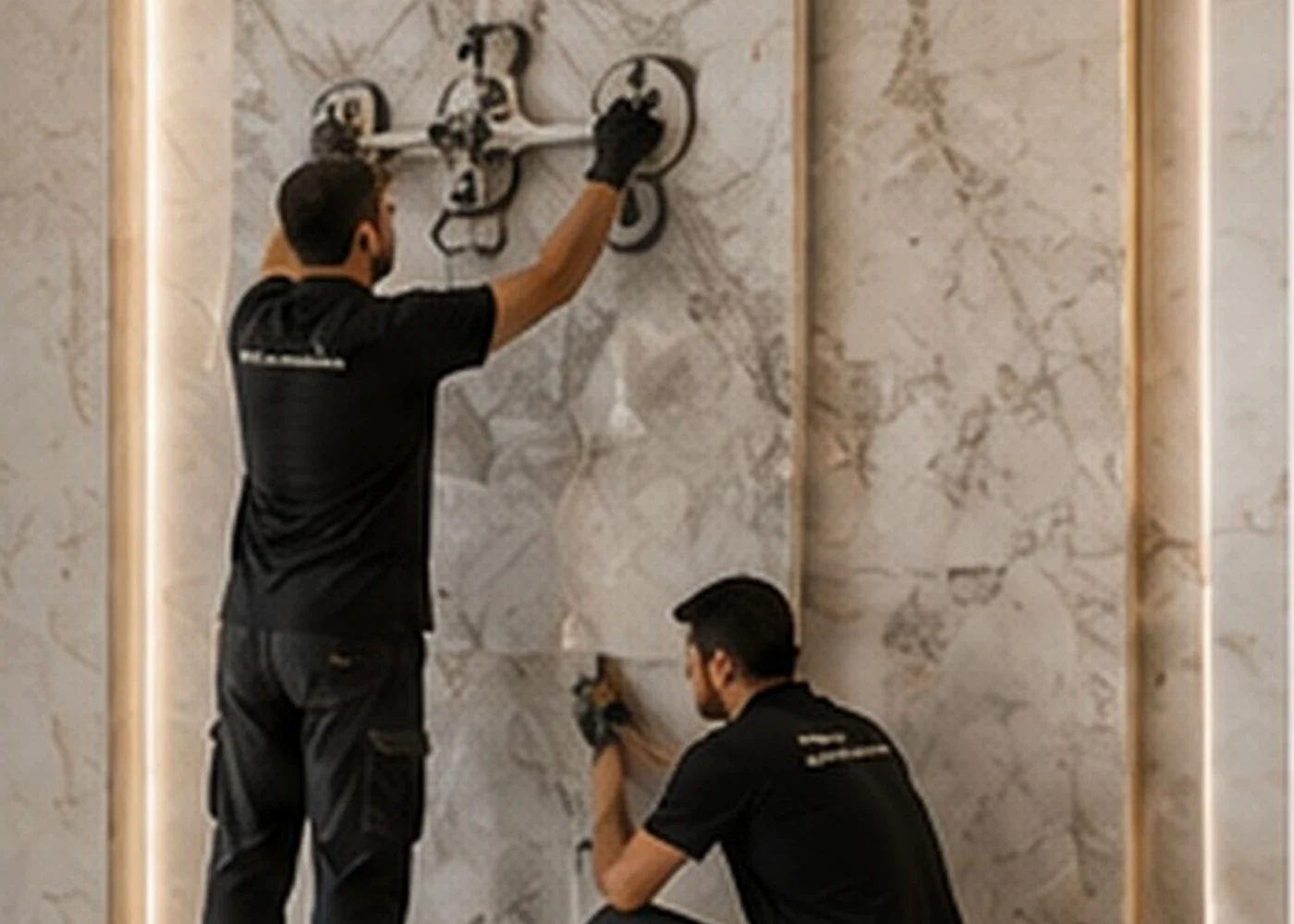
WHAT WE DELIVERED
What we did on this project
We delivered the recorded G+11 JVC stone project with Al Ikhlas Building Contracting.
Eleven levels create useful repetition, but real floors can still differ in wall lines, levels and finished interfaces.
We therefore repeat the approved logic, not unverified dimensions: use a typical reference, recheck each floor group and keep custom-fit pieces outside blind repetition.
THE REAL DELIVERY CHALLENGE
Use repetition to improve efficiency without letting it hide floor-specific differences.
Challenge
Use repetition to improve efficiency without letting it hide floor-specific differences.
Our response
Keep a typical-floor benchmark for what should repeat and separate verification for dimension-sensitive conditions.
What the project demonstrates
The G+11 project adds disciplined mid-rise repetition and fast floor-group feedback to our JVC experience.
PROJECT DELIVERY CONTROLS
Project-specific delivery controls, not a reconstructed BOQ.
Define recurring joints, edges and finish expectations.
Compare completed floors before wider release.
Keep dimension-sensitive pieces outside repeat batches.
Move stone according to real floor readiness.
Monitor joints, thresholds and edges for drift.
Resolve repeated issues before later floors inherit them.
HOW WE APPROACHED THE WORK
The original historical method statement is not preserved; this sequence reflects practical delivery logic appropriate to the project record.
Define what should repeat.
Check actual geometry.
Control vertical movement.
Review against the benchmark.
Correct deviation before the next group.
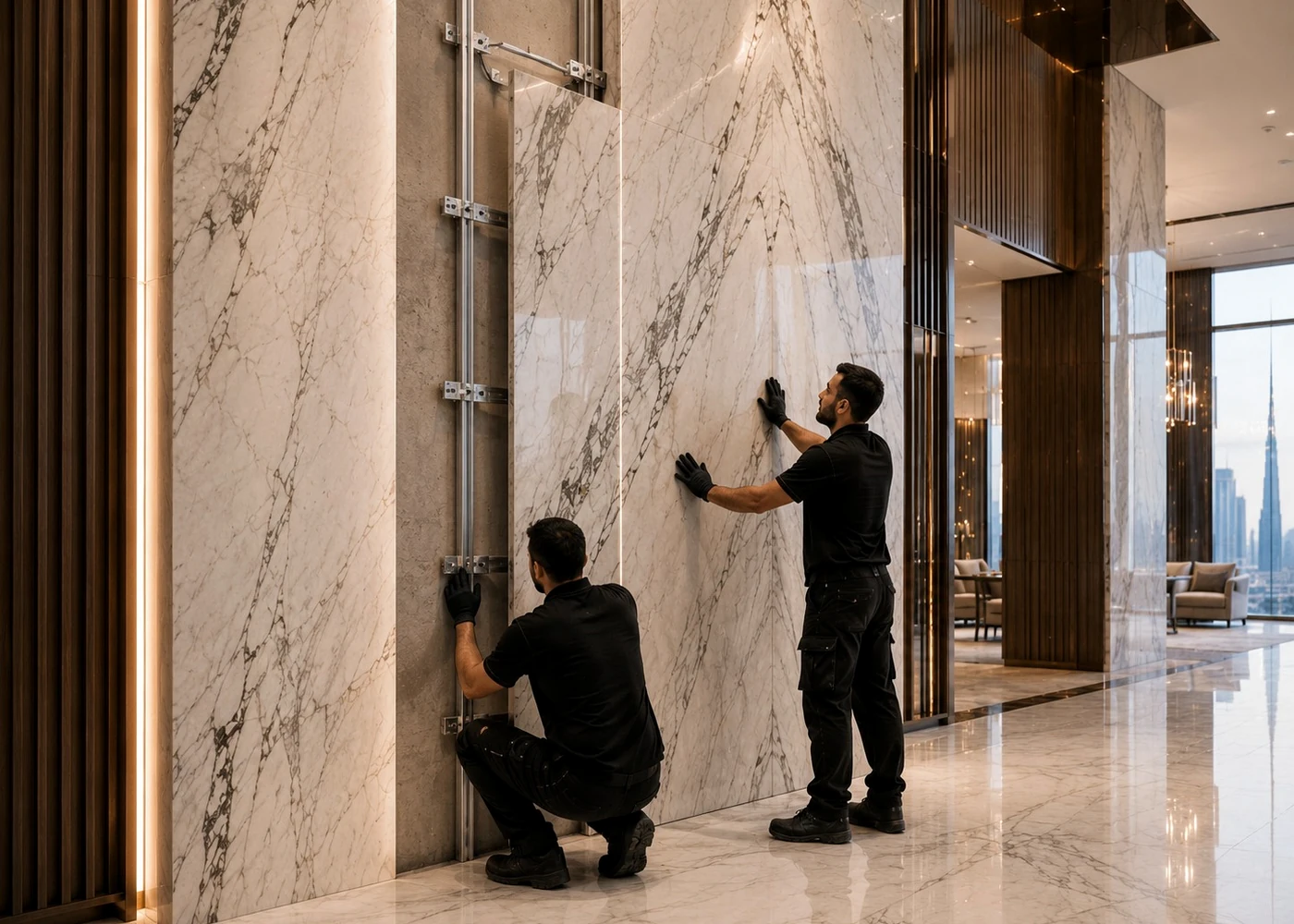
PROJECT VISUALS
Generic image URLs are placeholders only.

WHAT THIS PROJECT ADDS TO OUR EXPERIENCE
Experience that carries into the next project
The G+11 project adds disciplined mid-rise repetition and fast floor-group feedback to our JVC experience.
EXPERIENCE WE CARRY FORWARD
Mid-rise repetition works best when feedback is faster than the rate of repetition.
Using repetition deliberately.
Correcting recurring issues quickly.
Protecting dimension-sensitive work from assumptions.
Matching material movement to floor readiness.
PLANNING A SIMILAR PROJECT?
Send the drawings, stone references, site status and critical interface details so repeatable work and final-site verification can be separated correctly.