COMPLETED PORT / INFRASTRUCTURE RENOVATION · DUBAI

JAFZA Port Renovation — Dubai

Renovating stone inside an active port environment means the work has to fit around existing construction, operational movement and the geometry revealed only after old finishes are opened.

We carried out the recorded renovation project at JAFZA Port in Dubai with Amana Steel and Building. The archive identifies this specifically as a renovation, which makes the case study fundamentally different from new-build stone installation. The page focuses on condition survey, selective removal, substrate assessment, replacement geometry, durable transition details, work-front phasing and protection in an infrastructure environment where the broader facility may continue operating around the work.

RenovationProject TypeExplicitly recorded in archive
DubaiLocationAs recorded in project archive
Amana Steel and BuildingProject PartnerAs listed in project archive
CompletedStatusHistorical completed-project register
Temporary representative project image for JAFZA Port Renovation — Dubai TEMPORARY REPRESENTATIVE IMAGE
Project partnerAmana Steel and Building
ProjectRenovation — JAFZA Port
Recorded locationDubai
Case study URL/projects/jafza-port-renovation/

WHAT WE DELIVERED

A completed port renovation where the existing condition had to be understood before the replacement stone could be trusted.

What we did on this project

The archive records a JAFZA Port Renovation project in Dubai with Amana Steel and Building.

Renovation inside infrastructure is less predictable than new-build work. Existing finishes can conceal weak substrates, inconsistent levels, old adhesives, damaged edges or previous repairs that only become visible after removal begins.

We therefore frame this project around condition-led decision making: survey first, open the work front carefully, reassess the substrate, template replacement pieces to the exposed reality and phase the new stone so completed areas are protected while surrounding activity continues.
THE REAL DELIVERY CHALLENGE

Replace or renew architectural stone without assuming the existing substrate and geometry match the original drawings.

Renovation risk is hidden condition: the work changes as soon as old finishes are removed and the real substrate becomes visible.

01

Replace or renew architectural stone without assuming the existing substrate and geometry match the original drawings.

Renovation risk is hidden condition: the work changes as soon as old finishes are removed and the real substrate becomes visible.

02

Use staged opening, condition assessment and as-built replacement measurement before committing the new stone.

The project is treated as an investigation-and-delivery sequence rather than a straightforward new installation.

03

Completed stone-renovation experience in a major Dubai port / infrastructure environment.

The project adds active-infrastructure renovation, existing-condition assessment and phased replacement logic to our portfolio.

PROJECT DELIVERY CONTROLS

The controls that matter when old stone and hidden substrate conditions define the new work.

These controls are tailored to the recorded project context and are not presented as a reconstructed historical BOQ.

01

Condition survey

Document visible damage, levels, joints and interfaces before removal.

02

Selective opening

Remove enough to understand the substrate without unnecessarily disturbing retained work.

03

Substrate assessment

Check what the old finish concealed before deciding the replacement method.

04

As-built templating

Measure replacement pieces to the exposed real geometry.

05

Phased work fronts

Keep renovation areas manageable within the broader port environment.

06

Protection / closure

Protect new stone and close completed areas before the next renovation zone opens.

HOW WE APPROACHED THE WORK

Open carefully, reassess honestly, replace to the real condition and close each zone before moving on.

The original historical method statement is not available; this sequence reflects practical project-delivery logic appropriate to the verified record.

01

Survey the existing finish

Record visible conditions and interfaces.

02

Open the first controlled area

Expose enough substrate to validate the replacement approach.

03

Measure the revealed geometry

Use as-built information for replacement pieces.

04

Install and protect the renewed stone

Complete the active work front cleanly.

05

Close before opening the next zone

Keep the renovation controlled and traceable.

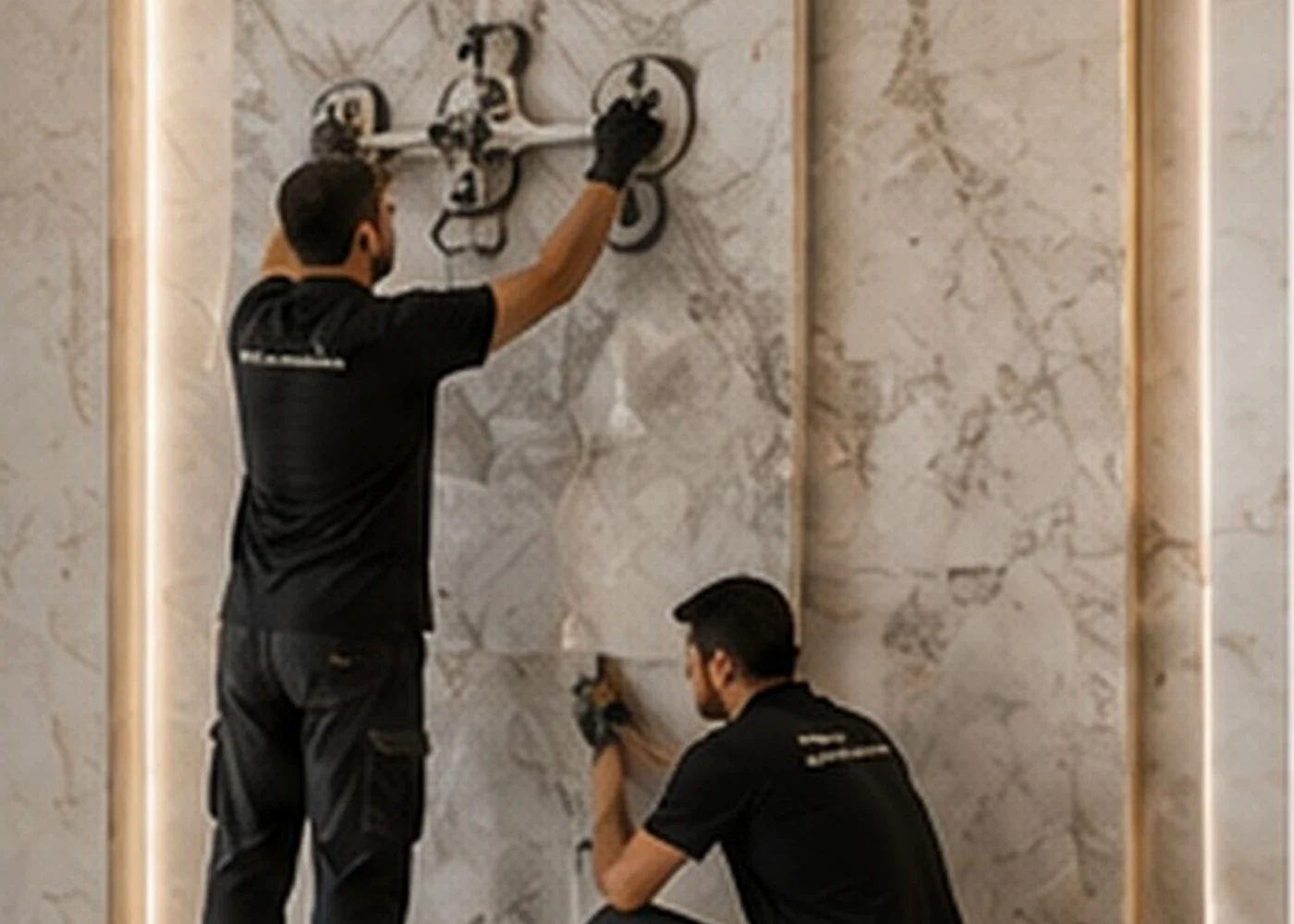
Temporary representative experience image for JAFZA Port Renovation — Dubai

WHAT THIS PROJECT ADDS TO OUR EXPERIENCE

Renovation quality begins with admitting what is not known until the old finish is opened.

Experience that carries into the next project

JAFZA Port Renovation adds infrastructure-scale existing-condition assessment and phased stone replacement to our completed experience.

EXPERIENCE WE CARRY FORWARD

Renovation controls we carry into future replacement projects.

These points explain why this completed project matters as experience rather than simply listing it as another completed job.

01

Condition-led planning

Letting the real existing substrate shape the replacement decision.

02

Selective demolition discipline

Opening only what is necessary to understand and repair the work front.

03

As-built fabrication

Making replacement stone fit the condition that actually exists.

04

Phased active-facility closure

Keeping renovation areas controlled around broader infrastructure activity.

PLANNING A SIMILAR PROJECT?

Planning stone replacement or renovation inside an existing facility?

Send the current-condition photos, known substrate details, areas to retain and access constraints so the survey, removal and replacement sequence can be planned before irreversible work begins.