Challenge
Keep recurring stone details consistent in a high-use building.
Accommodation projects combine repetition with frequent daily use, so small level, joint or edge inconsistencies can become both visible and maintenance-sensitive.
COMPLETED ACCOMMODATION PROJECT · JEBEL ALI
Accommodation stonework has to survive daily use — not just look good on handover day.
We carried out the recorded marble and stone project package for a labor-accommodation development in Jebel Ali, Dubai with CHC Building Contracting. In repeated, high-use accommodation, the quality test is practical: levels need to remain consistent, edges and transitions need to be durable, wet and dry interfaces need to be controlled, and the same detail must be repeatable without letting small site variations become recurring defects.
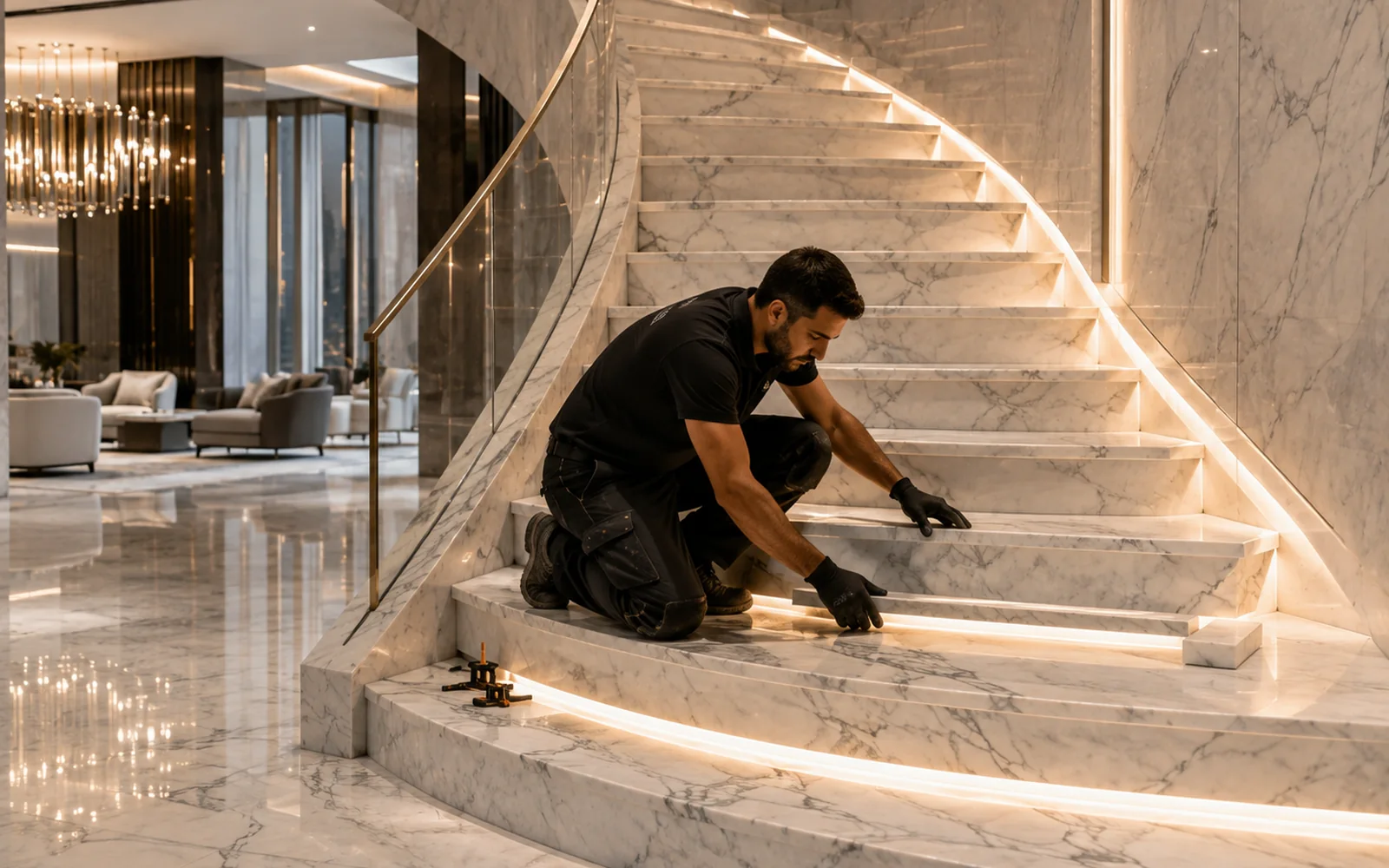
WHAT WE DELIVERED
The work had to be repeatable enough for multiple accommodation zones and practical enough for heavy day-to-day use.
Our completed-project register records this Jebel Ali labor-accommodation project with CHC Building Contracting. Unlike a one-off decorative room, accommodation work is driven by repetition: recurring floor zones, similar thresholds, wet-area transitions and circulation routes create an opportunity to work efficiently — but they also create a risk of repeating the same mistake many times.
We treated repeatability as a control system rather than an assumption. Reference levels, edges, joints and interfaces needed to be checked against the actual receiving area before the same detail was carried into the next zone. Where surrounding trades affected an opening, threshold or wall line, the stone package had to respond to the site condition without losing the common visual standard.
The historical record does not identify the exact marble names or the room-by-room BOQ. We therefore keep those details unclaimed. What this project credibly demonstrates is completed experience on a Jebel Ali accommodation project where durability, repeatability and progressive handover matter more than decorative one-off detailing.
THE REAL DELIVERY CHALLENGE
Repeated zones make planning more efficient, but every repeated threshold, joint or edge also becomes a quality multiplier. Our approach is to lock the reference, verify the receiving condition and inspect before the detail is repeated again.
Challenge
Accommodation projects combine repetition with frequent daily use, so small level, joint or edge inconsistencies can become both visible and maintenance-sensitive.
Our response
We work from common references while checking actual openings, floors, wet-area transitions and surrounding finishes before committing stone.
What the project demonstrates
The project adds repeated-zone control, durable interface thinking and progressive accommodation handover to our completed-project experience.
ACCOMMODATION DELIVERY CONTROLS
The archive does not preserve the detailed scope schedule. These are the delivery controls reasonably associated with the recorded labor-accommodation project and are presented as project-level experience, not as a reconstructed BOQ.
Keep repeated floor and wall references consistent so recurring zones do not drift as installation progresses.
Verify thresholds, edges and changes in finished level where bathrooms, wash areas or service zones meet drier circulation spaces.
Treat exposed corners, skirting junctions and frequently used transitions as long-term service details, not just visual details.
Prepare repeatable components in controlled groups while keeping special pieces separate for areas that differ from the typical condition.
Check alignment, joints, edges and surface condition before the same detail is repeated into the next accommodation zone.
Close completed work fronts in manageable sections and protect finished stone from ongoing construction activity.
HOW WE APPROACH REPEATED ACCOMMODATION WORK
The original method statement was not supplied. This sequence reflects the control logic we apply to repeated accommodation stone packages and can be refined if original site records become available.
Group the typical floor, wall, threshold and interface conditions that should follow one approved reference.
Check actual levels, openings, wall lines and surrounding trade readiness before releasing stone to that zone.
Carry the approved set-out through the active work front while controlling joints, edges and visible alignments.
Pay particular attention to thresholds, corners, circulation edges and transitions that will receive frequent daily use.
Resolve snags before moving onward and protect completed stone from damage by following trades.
PROJECT VISUALS
The completed-project register verifies the CHC Jebel Ali labor-accommodation project but does not contain a dedicated photo set. These temporary visuals can be replaced later without changing the template or database structure.


WHAT THIS ACCOMMODATION PROJECT ADDS
A detail that works once is not enough; it has to keep working when it is repeated and used every day.
This project adds experience in repeated accommodation zones, practical interface control, durable edge thinking and progressive handover in Jebel Ali.
EXPERIENCE THIS PROJECT ADDS
Practical lessons from repeated, high-use interior stone work.
Using one reference across recurring zones without assuming every receiving condition is identical.
Giving thresholds, edges, skirting junctions and wet/dry transitions the attention they need for everyday use.
Separating repeat pieces from special conditions so preparation stays efficient without forcing the wrong piece into the wrong location.
Inspecting and protecting finished zones as the project advances rather than leaving all defects to final handover.
RELATED ACCOMMODATION PROJECTS
Explore other completed projects with similar property, location or stonework context.
A separate completed Jebel Ali accommodation record with Al Sahel Contracting LLC.
VIEW CASE STUDY →Completed G+4 labor-camp project with TAK Construction LLC.
VIEW CASE STUDY →Completed G+4 project in Dubai Investment Park with Tamimmi Interiors LLC.
VIEW CASE STUDY →SERVICES RELEVANT TO ACCOMMODATION PROJECTS
For similar projects, the services below may be relevant depending on the actual stone, drawings, quantities, fabrication requirements and site conditions.
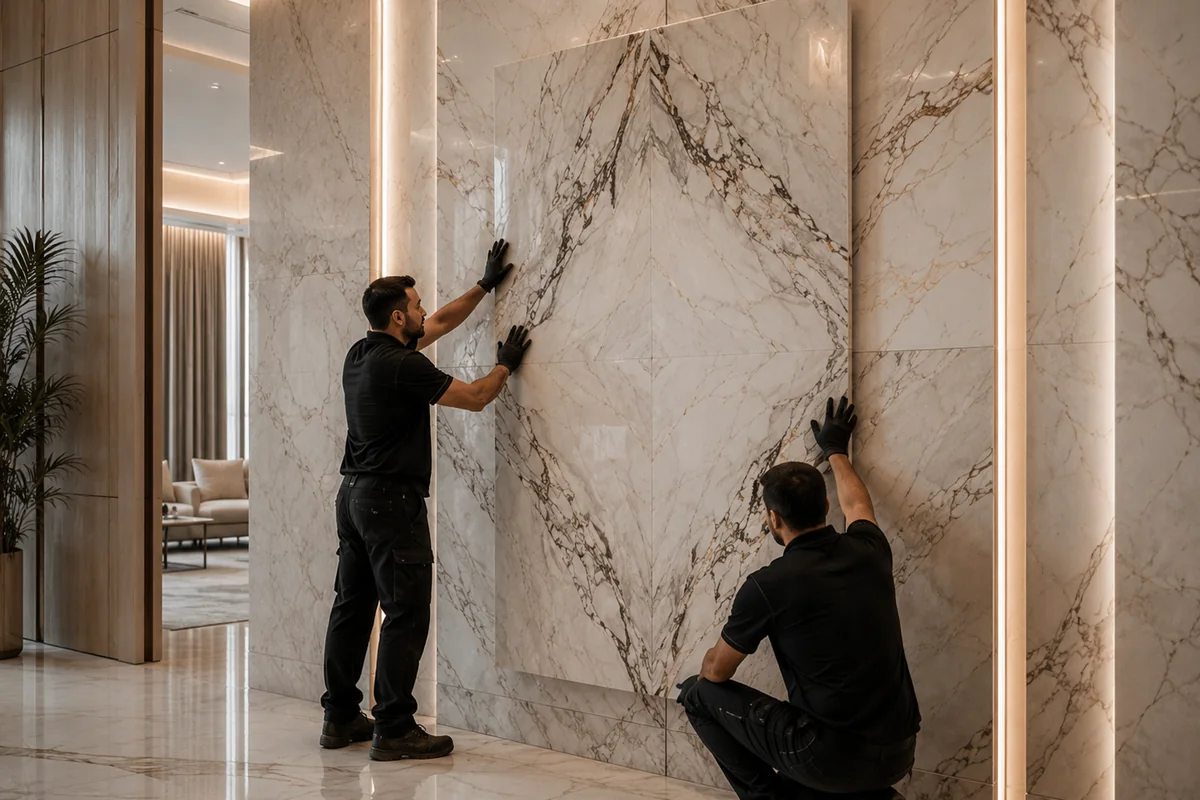
For new marble and stone floors, walls, staircases and feature surfaces where set-out, joints, edges and installation quality must stay controlled.
Explore installation service →
For fabricated stone worktops, vanity tops, cut-outs, edges and interior components that must match actual site geometry and surrounding finishes.
Explore countertop fabrication →
For honed, textured, anti-slip, sealed or other controlled stone finishes where appearance, use and maintenance requirements need to be defined before treatment.
Explore surface finishing →PLANNING ACCOMMODATION STONE WORK?
For staff accommodation and repeated residential layouts, share drawings, typical details, material references, area quantities, wet-area interfaces and required handover sequence.